
Bill History

MEPCO Bill History — Check Old MEPCO Bills Online
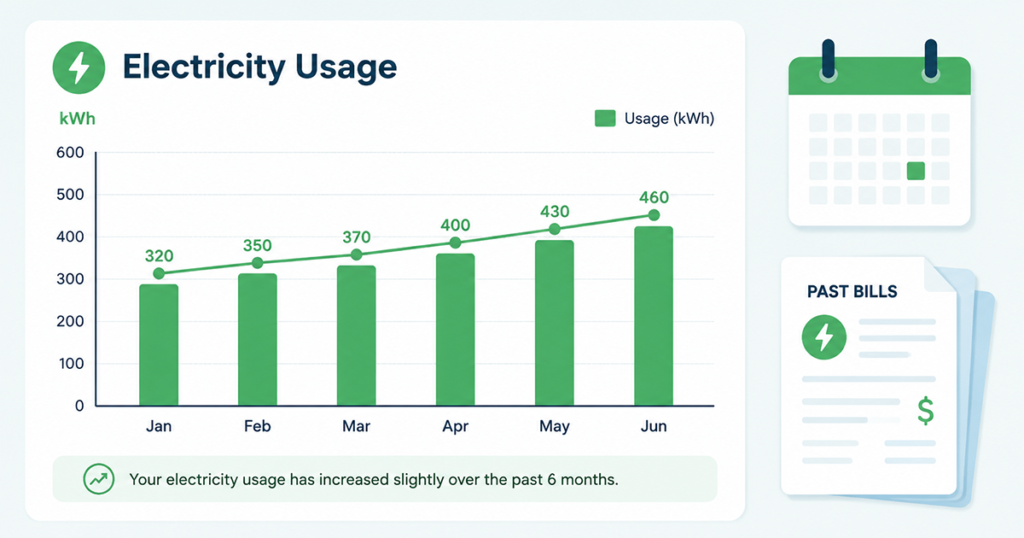
A single month’s MEPCO bill only tells part of the story. The real value in understanding your electricity usage comes from looking at your MEPCO bill history — several months side by side — which is what actually reveals whether a high bill is a one-off spike, a seasonal pattern, or the start of a genuine problem with your meter or wiring.

What Is MEPCO Bill History?

MEPCO bill history refers to the record of your previous bills — billing month, units consumed, and payable amount — tied to your Consumer ID. Because your Consumer ID stays constant across billing cycles (unlike the 14-digit reference number, which changes every month), it’s the key that lets you pull multiple past bills for the same connection.

Why Checking Your MEPCO Old Bills Matters

Reviewing bill history isn’t just for curiosity — it solves practical problems:

  • Spotting billing errors early. If one month’s units jump sharply with no lifestyle change, comparing against several prior months makes the anomaly obvious immediately, rather than after three high bills in a row.
  • Understanding seasonal patterns. Summer air-conditioning load and winter heating load create predictable swings — recognising your own pattern helps you budget rather than being surprised each year.
  • Supporting a complaint or dispute. If you need to challenge a bill through CCMS or in person, showing a clear consumption trend strengthens your case far more than a single month’s number.
  • Verifying a meter change or repair. After a meter is replaced or repaired, comparing before-and-after consumption confirms whether the fix actually resolved an accuracy issue.

How to Check Your MEPCO Old Bill Check Records

  1. Locate your Consumer ID — a shorter, permanent number printed on any of your MEPCO bills (unlike the reference number, it doesn’t change monthly).
  2. Enter it into the Check Bill tool the same way you would for a current bill.
  3. Where available, browse or request the history view to see previous months alongside the current one.
  4. Download or note the units and amounts for each month you want to compare.

If your online history view doesn’t go back as far as you need — some systems retain a limited rolling window — your MEPCO sub-divisional office can provide a longer paper or verified record on request, particularly useful for disputes, loan applications, or utility-usage documentation.

Reading a MEPCO Bill History Table

When comparing months, focus on three figures side by side rather than the payable amount alone, since the amount is affected by tariff and surcharge changes that have nothing to do with your actual usage:

MonthUnits ConsumedPayable AmountNotes
Example: June320HigherPeak summer cooling load
Example: October180ModerateShoulder season
Example: January140LowerMinimal heating/cooling load

Units consumed is the number that reflects your actual behaviour; the payable amount also reflects that month’s FPA, QTR adjustment, and any deferred balance, which is why two months with similar units can still show different totals.

What Counts as a “High” or “Unusual” Bill?

There’s no single universal threshold, but a few signals are worth investigating:

  • A jump of more than 30–40% in units month over month, without a clear cause like a new appliance, more household members, or a seasonal shift.
  • A bill marked “estimated” for two or more consecutive months, followed by a large correction — this usually means an actual reading finally caught up with several months of under- or over-estimation at once.
  • A bill amount that rises sharply while units stay flat or fall — this points to a tariff, surcharge, or slab change rather than a usage issue, and is worth understanding rather than disputing.

Frequently Asked Questions

How far back can I check my MEPCO bill history?

This depends on the retention window of the system you’re using; many tools retain a rolling 6–12 months. For older records, your MEPCO sub-divisional office can provide verified historical data.

Not reliably — reference numbers are specific to a single billing cycle. Use your Consumer ID to pull bills across multiple months instead.

This means the meter reader couldn’t access the meter that cycle, so MEPCO billed based on historical average consumption, later corrected once an actual reading was taken.

No. Bill history is a public-facing record you can view yourself; the MIS is MEPCO’s internal system, explained fully in our [INTERNAL LINK: /mepco-mis “MEPCO MIS guide”].

Yes — a documented consumption trend is one of the strongest pieces of evidence when raising a billing complaint through CCMS or in person at your sub-division.